Massage & Bodywork · Murrieta, CA
Massage & Bodywork Services
- CAMTC-certified massage therapist (CAMTC #8438)
- ABMP professional member
The Types of Massage I Offer
I offer fourteen massage and bodywork services, and I perform every session myself. The menu gives us a starting point, not a rigid plan. Most people know what they want from the hour better than they know the name of the massage: less tension, a quieter pace, focused work, or more comfortable movement. Tell me that, and we can choose a useful direction together. If you are unsure, start with a therapeutic session from the home page. We will talk before the hands-on work begins and adjust from there. Someone booking Swedish to relax and someone booking deep tissue for an unbearable shoulder want very different hours — the menu just tells me which one you're after.
How the Menu Works
Modality is a broad kind of bodywork, such as Swedish or sports massage. Technique is a method I may use inside a session, such as sustained pressure, stretching, or work with a tool. The line between them isn't always tidy, and it doesn't need to be. You are choosing a direction, not writing the treatment plan yourself. Swedish massage is the familiar relaxation style built around long, flowing strokes. It is a good place to begin when you want full-body work and do not need the whole appointment centered on one area. A customized session means I adjust the pressure, pace, areas of focus, and techniques after we talk. It does not mean every technique belongs in every appointment. Lists of massage types vary because they group modalities and techniques differently. Healthline’s overview of massage types includes familiar categories such as Swedish, hot stone, aromatherapy, deep tissue, sports, trigger point, reflexology, and shiatsu. GoodRx uses a seven-type overview. My menu reflects the work I offer in my Murrieta studio, so not every style in those overviews appears here.
Therapeutic & Relaxation Sessions
These sessions are a good fit when you want full-body work, a quieter hour, or focused attention within a relaxing session. I can use gentle or firmer pressure; those are not separate appointments. What I learned is that more pressure is not automatically more useful. The right amount is the amount that lets you stay comfortable and gives me clear feedback as we go.
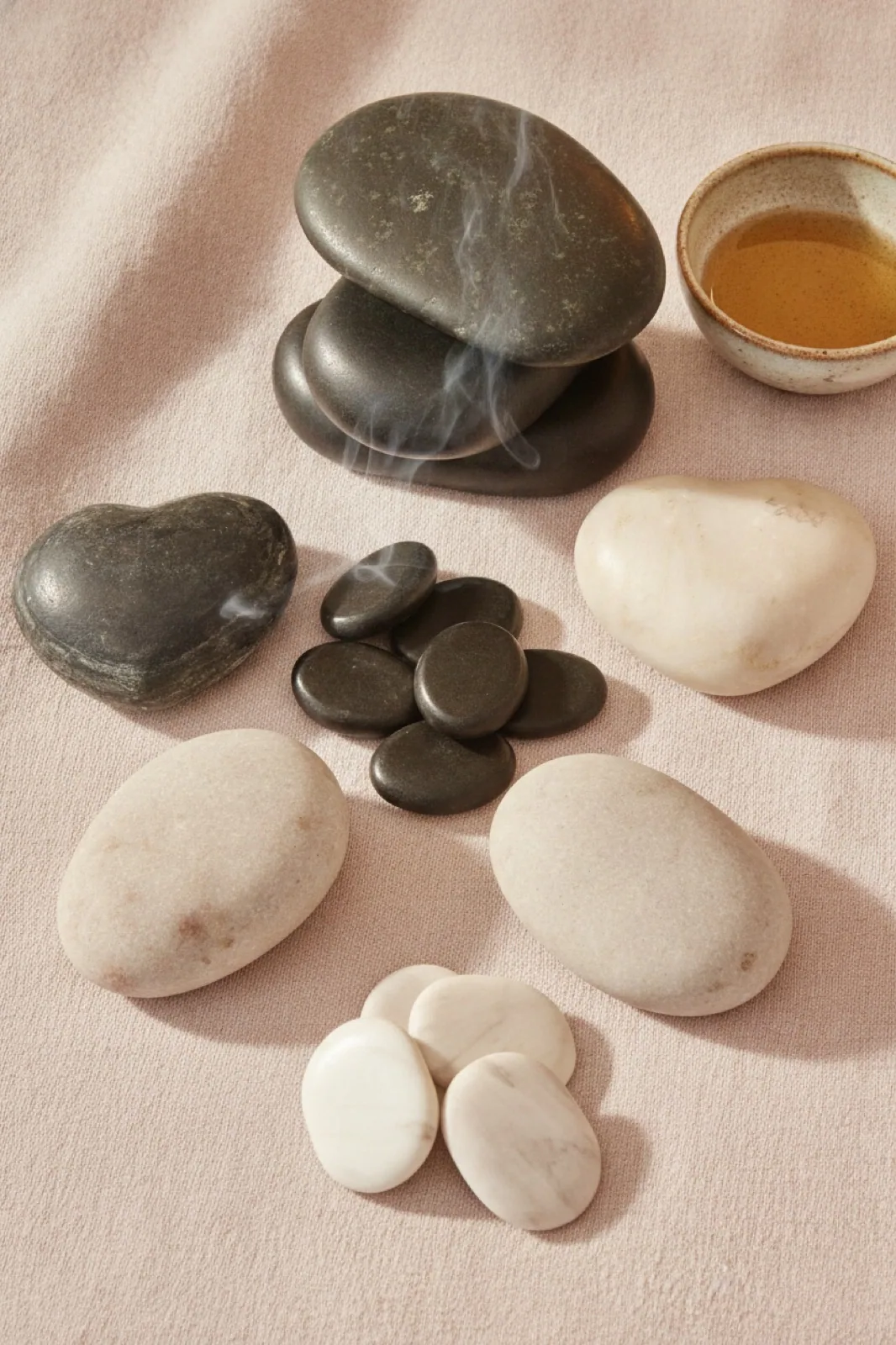
- Hot Stone Massage — my signature session, mixing heated basalt and cool marble stones
- Deep Tissue Massage — slow, firm work for chronic tension and stubborn knots
- Swedish Massage — classic flowing relaxation, ideal for first-timers
- Aromatherapy Massage — essential oils layered onto gentle full-body work
- Prenatal Massage — side-lying comfort work during pregnancy
- Postpartum Massage — recovery-focused sessions for new mothers
Four Familiar Starting Points
Swedish, deep tissue, sports, and trigger point massage are four familiar starting points. The question I get most often is whether deep tissue has to be painful. It does not. Swedish uses long, flowing strokes; deep tissue uses slower, firmer work for long-standing tightness; sports massage follows the demands of an activity; trigger point focuses on a specific tight area. I offer all four, and I am just as likely to combine approaches in one session as to keep them separate.
Choose by Goal, Not by the Strongest-Sounding Name
Start with the result you want from the hour, then tell me how your body feels that day. Pressure is a separate conversation. You can ask for less, more, or something different at any point.
Quiet, Full-Body Relaxation
Swedish is a simple place to begin. Aromatherapy adds scent when that helps you settle, and hot stone adds warmth. These sessions can still include focused work, but the overall pace stays unhurried.
One Persistent Area
Approaches such as deep tissue, trigger point, myofascial release, cupping, or gua sha may fit when one area needs more attention. You do not have to identify the right tissue or technique. Tell me where you notice the tightness, what seems to aggravate it, and what kind of touch you tolerate well. In my experience, a plain description usually tells me more than a technical label.
Training, Activity, or Mobility
Sports massage starts with the demands of your activity. PNF stretching can make sense when assisted movement is part of the goal. Neither is only for elite athletes. The useful information is what you do, when you feel limited, and what you need to do next.
Pregnancy, Postpartum, or Gentle Rhythmic Work
Prenatal and postpartum sessions account for positioning and comfort around pregnancy and birth. Lymphatic drainage uses a much lighter, more rhythmic approach than deep tissue. These are distinct choices, even though all three can feel gentle. For example, if your neck feels tight after weeks at a laptop but you also want to relax, book Swedish or a therapeutic session and tell me both things. I may spend more time around the shoulders without turning the whole hour into forceful neck work. The service name starts the conversation; your comfort keeps directing it.
Massage, Simply Put
Massage is hands-on work with soft tissue, muscle, fascia, and connective tissue. Pressure, stretch, and rhythm can all be part of it. Each service on this page is a different way to approach that work.
Recovery & Specialty Bodywork
These options use a more specific approach, from light rhythmic work to tools or assisted stretching. A service name helps us start the conversation, but it never requires a certain intensity. Most clients tell me that knowing they can speak up makes it easier to try something unfamiliar.
- Lymphatic Drainage Massage — light, rhythmic work
- Sports Massage — pre-event, post-event, and training recovery work
- PNF Stretching — assisted contract-relax stretching
- Trigger Point Massage — focused work for a specific tight area
- Myofascial Release — sustained, gentle pressure
- Pain Relief Massage — sessions built around a specific pain complaint
- Cupping Therapy — a session that uses suction cups
- Gua Sha — smooth-tool strokes along muscle groups
Your Appointment, Your Call
We talk before the hands-on work begins. I want to know what brought you in, what you do not want touched, whether you prefer quiet or conversation, and what pressure usually feels productive. You can change your mind during the session. Ask for less pressure, more warmth, a different position, or an end to a technique. Clear feedback makes the work more specific. You stay comfortably draped, with only the area being worked uncovered. I work in one private Murrieta studio and see clients by appointment; there are no walk-ins, mobile appointments, on-site visits, or chair massage. Every service listed here is in-office. For example, if your calves feel worked after a long hike and your hips feel stiff, sports massage may still be a sensible booking even if you are not training for an event. The session can follow the activity and the areas involved. If gentle full-body work sounds better that day, say so. A label does not lock us into an intensity.
Massage is not a diagnosis or a substitute for medical care. I am a massage therapist, not a doctor. I don't diagnose conditions. If symptoms are new, severe, unexplained, or outside my scope, a medical professional is the right place to start. I'm CAMTC-certified (CAMTC #8438) — California's statewide certification for massage therapists — and I keep the conversation grounded in what massage can honestly do: provide skilled touch, support relaxation, and help you feel how your body responds. Rates start at $75, and the hot stone 90-minute session is $150. Square is the source of truth for current rates and appointment availability. If the menu still leaves you torn between two services, choose the closer fit and add a note when you book. You don't have to choose perfectly — sorting that out is my job.
Studio Details
Body In Hand Massage & Bodywork is at 25109 Jefferson Ave Ste 120, Murrieta, CA 92562. Sessions are by appointment in my private studio. Call (951) 440-6161 or book online on Square.
- Monday, Tuesday, Thursday: 9:00 AM - 5:00 PM
- Saturday and Sunday: 8:00 AM - 8:00 PM
- Wednesday and Friday: closed
Read more about my training and credentials, see the areas I serve, or visit the contact page for hours and studio details.
I noticed people spend longer choosing from this list than they need to. The name on the booking is a starting point, not a contract, and I adjust once you are on the table. A Swedish session that turns into focused shoulder work happens all the time here. I've learned to tell people that before they agonize over the menu. One thing worth saying plainly. For most healthy adults massage is comfortable, low-risk care, and the National Center for Complementary and Integrative Health puts the risk of harmful effects as low (NCCIH, 2024). That same source is honest that the evidence for pain relief is mixed rather than settled, and I would rather repeat that than promise more than an hour can deliver. If you want to know who you are booking with, my about page covers my training and certification, and the contact page has the map, current hours, and a short contact form, so you can see who you're booking with before you commit to anything.
At a glance
- Monday, Tuesday, Thursday: 9:00 AM - 5:00 PM
- Saturday and Sunday: 8:00 AM - 8:00 PM
- Wednesday and Friday: closed
- Sessions from $75; the traditional 90-minute hot stone session is $150
- In-office only, by appointment, at 25109 Jefferson Ave Ste 120, Murrieta
Book your session
Customized bodywork in Murrieta
Every session is shaped to your body — therapeutic, deep tissue, and hot stone work, adapted to what you need that day.
Book a Session- Aromatherapy MassageAromatherapy massage in Murrieta with a gentle full-body flow and a scent blend chosen with you. In-office sessions with Erika Cocco.View →
- Cupping TherapyDry and glide cupping in Murrieta, CA, blended into massage for muscle tension and recovery support with Erika Cocco, CAMTC #8438.View →
- Deep Tissue MassageDeep tissue massage in Murrieta for stubborn tension and persistent knots. Slow, firm work shaped around you by Erika Cocco, CAMTC #8438. Book online.View →
- Gua ShaBody gua sha massage in Murrieta, CA. Focused, adjustable bodywork for tense shoulders, neck, and back with Erika Cocco, CAMTC #8438.View →
- Hot Stone MassageTraditional 90-minute hot stone massage in Murrieta: heated basalt and cool marble in Erika Cocco’s La Stone session. Book through Square.View →
- Lymphatic Drainage MassageGentle lymphatic drainage massage in Murrieta with Erika Cocco, CAMTC #8438. A light, calm wellness session—not medical treatment.View →
- Myofascial ReleaseMyofascial release in Murrieta, CA. Slow, sustained fascia work for tightness and movement with Erika Cocco, CAMTC #8438.View →
- Pain Relief MassageNot sure which massage fits your pain? I’ll help match pressure and technique to your comfort at my Murrieta studio. In-office, by appointment.View →
- PNF StretchingPNF contract-relax assisted stretching in Murrieta with a CAMTC-certified massage therapist. In-office appointments, book online.View →
- Postpartum MassagePostpartum massage in Murrieta for new parents. Comfort-focused, in-office bodywork with Erika Cocco. Private sessions by appointment.View →
- Prenatal MassagePrenatal massage in Murrieta with Erika Cocco, CAMTC #8438. A side-lying, fully bolstered session shaped around your comfort. Book on Square.View →
- Sports MassageSports massage in Murrieta for active adults, planned around training, events, and recovery. Professional, responsive bodywork by Erika Cocco, CAMTC #8438.View →
- Swedish MassageSwedish massage in Murrieta: gentle, flowing full-body work tailored to your pressure preference. A welcoming first massage with Erika Cocco.View →
- Trigger Point MassageTrigger point massage in Murrieta, CA. Focused, feedback-led massage for familiar knots and referred sensations with Erika Cocco, CAMTC #8438.View →
Good to know
Frequently asked questions
What are the 7 basic massages?
There is no single official list of seven, but a common grouping is Swedish, deep tissue, hot stone, aromatherapy, sports, trigger point, and shiatsu massage. I offer the first six of those in my Murrieta studio; shiatsu is not on my menu. Other lists swap in Thai massage or reflexology because modalities are grouped differently. Use the names as a map, not a test. Start with whether you want relaxation, focused pressure, warmth, scent, or activity-specific work.
What is the hardest type of massage?
Deep tissue massage is usually the answer people mean, because it uses slow, focused work and can feel more intense than a relaxation session. Hardest does not mean best, and deep tissue should not be a contest in how much pressure you can tolerate. The right pressure is the amount your body can receive without bracing. If you want focused work but dislike heavy pressure, tell me; trigger point or myofascial techniques can be adjusted.
What is another term for massage?
Bodywork is the closest broad term, though it can include practices that are not massage. Massage therapy is the clearest name for hands-on work with soft tissue, and a modality is a particular style within that field. You may also see treatment, session, or therapeutic massage used in everyday language. On this menu, the exact label matters less than the goal you describe; I can help sort out the techniques after we talk.